Solar Projects
Solar power systems, built for your operation
We design, build and commission solar and battery systems for factories, hospitals, schools, farms and hotels, from 20 kWp into the megawatt range. We size each system to the power your site uses.
4,074 kWp
Solar capacity installed
3,923 kWh
Battery installed
300+
Systems installed
15
Years in East Africa
Solar power that keeps your business running.
Every power cut costs you money, because products spoil, batches are thrown away, staff wait around and machines take a beating each time they restart. Diesel is also expensive, and the price keeps rising. A well designed solar and battery system keeps your business running through outages, and your generator runs far less. We size the system from your power bills and your load, and where the bills do not tell the full story, we log your consumption first. We give panel size in kWp (peak output) and battery size in kWh (the energy a battery can store).
< 20 ms
Switchover to battery, Backup system
3 to 5 years
Typical payback, Solar Savings system
Choose from three system types to fit your site.
Solar Savings System
Solar panels run your daytime power needs straight off the roof and cut your grid bill from the first day.
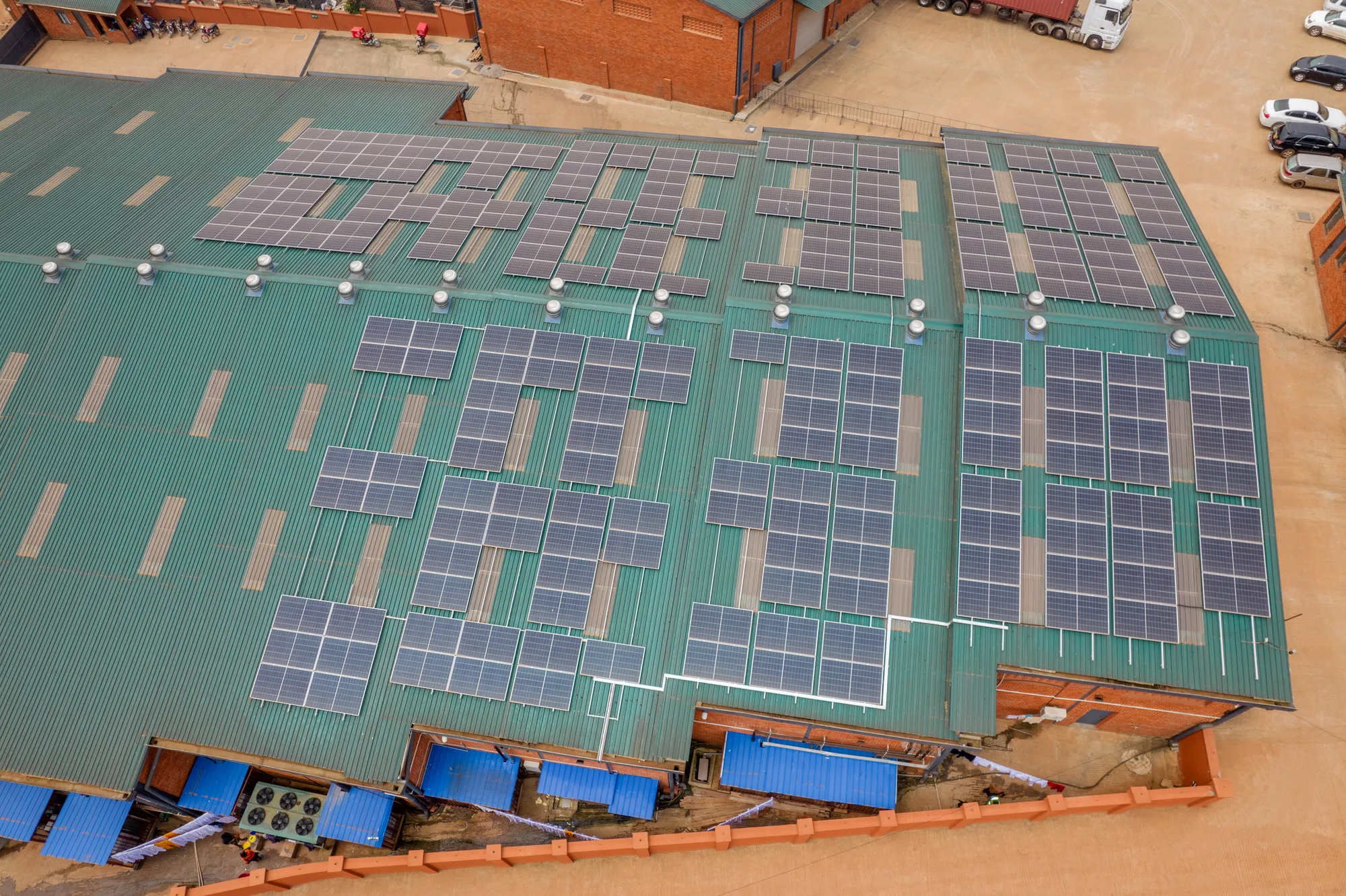
This is the simplest system. Solar panels are connected to your grid supply, and your generator can be linked in too. The panels cover as much of your daytime use as the roof allows, so you buy less power at peak tariff. Because there is no battery, it has the lowest cost and the fastest payback of any system, and it suits operations that run mainly in daylight hours. It does not keep your power on during a grid outage, which is what the Backup system is for.
- Lower grid and diesel bills
- No battery to buy or replace
- Fastest payback of any system
3 to 5 yr
Typical payback
30 to 40%
Typical cut in power cost
About 1,600
kWh a year from each kWp of panels
Up to 80%
Of daytime power from solar
Solar Backup System
Solar panels and a battery, sized to the equipment that must never stop, keep production running straight through an outage.
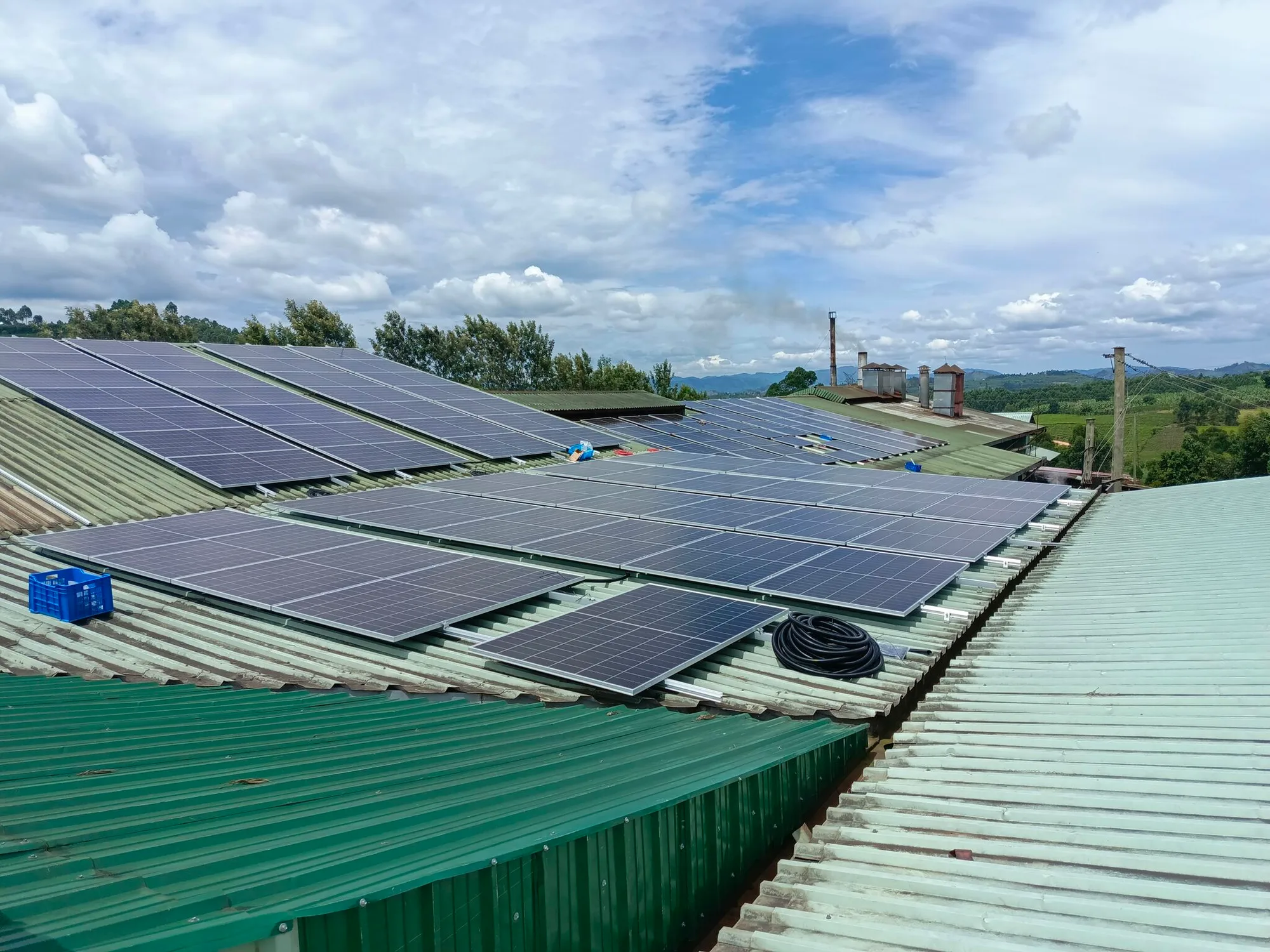
This is the savings system with a battery added. Solar runs your site during the day, and when the grid drops the system switches to the battery automatically. The battery then carries your equipment for anywhere from 2 to 12 hours or more, depending on the load. That means no restart damage, no spoiled batches and no staff waiting for the power to come back. It is the usual choice for factories, hospitals and processors on a weak grid.
- Power without interruption during outages
- No restart damage or spoiled batches
- Far less generator running
2 to 12h+
Backup, sized to your equipment
< 20 ms
Switchover from grid to battery
Solar Off-Grid System
A larger solar and battery system carries the whole site day and night, without relying on the grid.
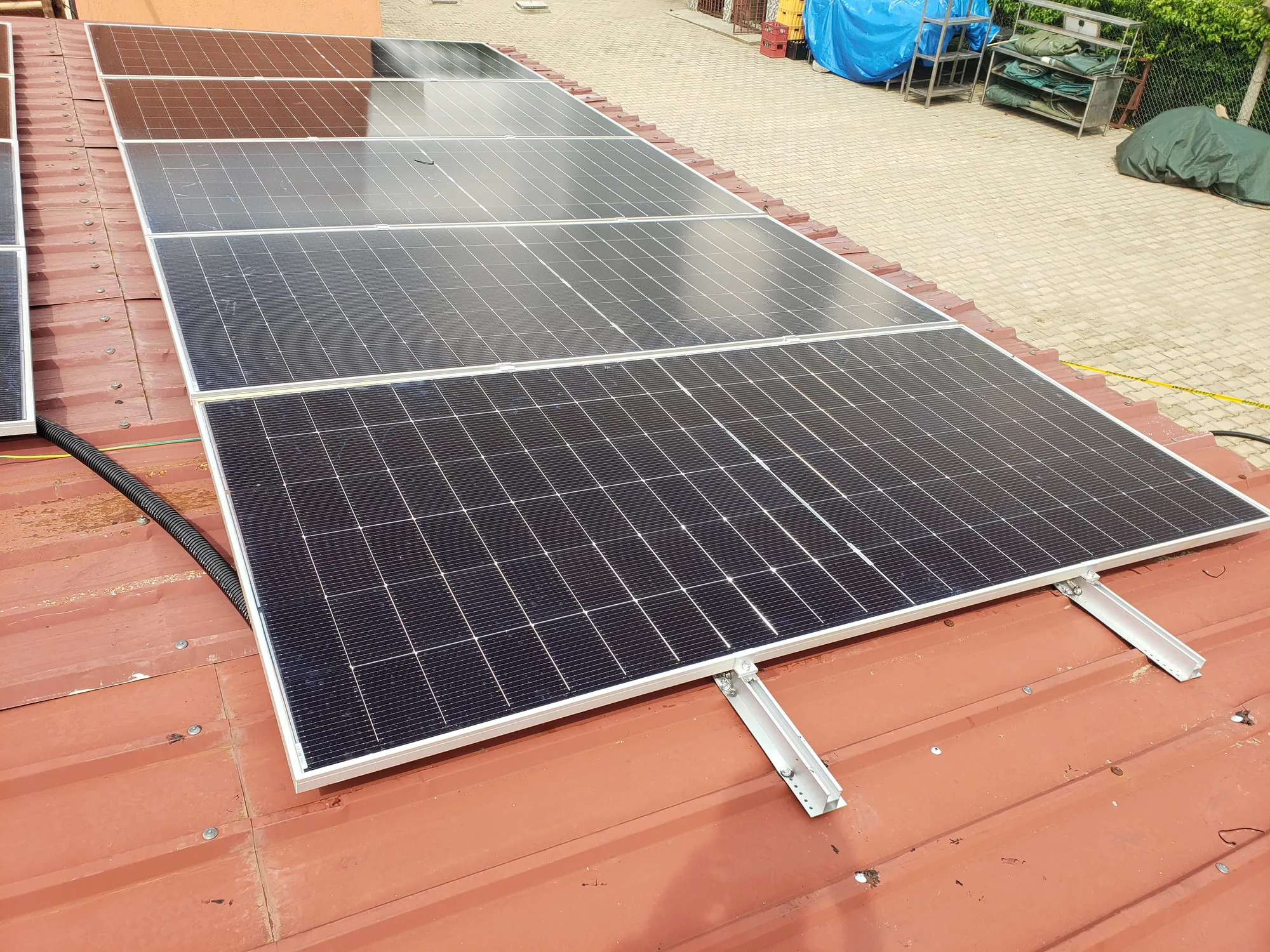
This is the backup system scaled up, with more panels and more battery storage, so it can run the site around the clock and supply 95% or more of your power from solar. It is built for places with no reliable grid, or where the power supply must never fail. The generator stays on site only as a last reserve for the cloudiest days.
- Full energy independence
- Backup sized for the cloudiest days
- Generator only as last reserve
Already running a diesel generator?
Most sites we work on already have a generator, and we keep it. We put solar in front of it and add a fuel-save controller, a unit that decides second by second how much power comes from each source. The two then run as one system, and your diesel use typically drops by 40 to 60%.
Solar comes first
The panels supply as much of your power as the sun allows at any moment.
The controller manages the split
It balances solar, battery and generator, so the generator only covers what is missing.
The generator runs less
It runs only to fill the gap and switches off when solar and battery cover your load.
Financing your system
We are an EPC (engineering, procurement and construction) contractor. We engineer, supply and build the whole system and hand it over ready to run, using tier-one components. We do not finance systems ourselves. You choose how to pay, and we introduce you to finance partners.
Direct purchase
You own the system outright and keep all the savings from the first day. It is also the fastest way to get your system built.
Lease or PPA
A finance partner pays for the system, so you start with little or no money upfront. With lease-to-own you pay monthly and own the system at the end, and with a PPA (power purchase agreement) you pay for the solar power you use.
Bank or green loan
You borrow from a commercial bank, including green credit lines funded by development banks, and repay the loan over an agreed term.
Whichever route you choose, we prepare the feasibility study and the full documentation a lender needs to approve the finance.
Some of the projects we have delivered
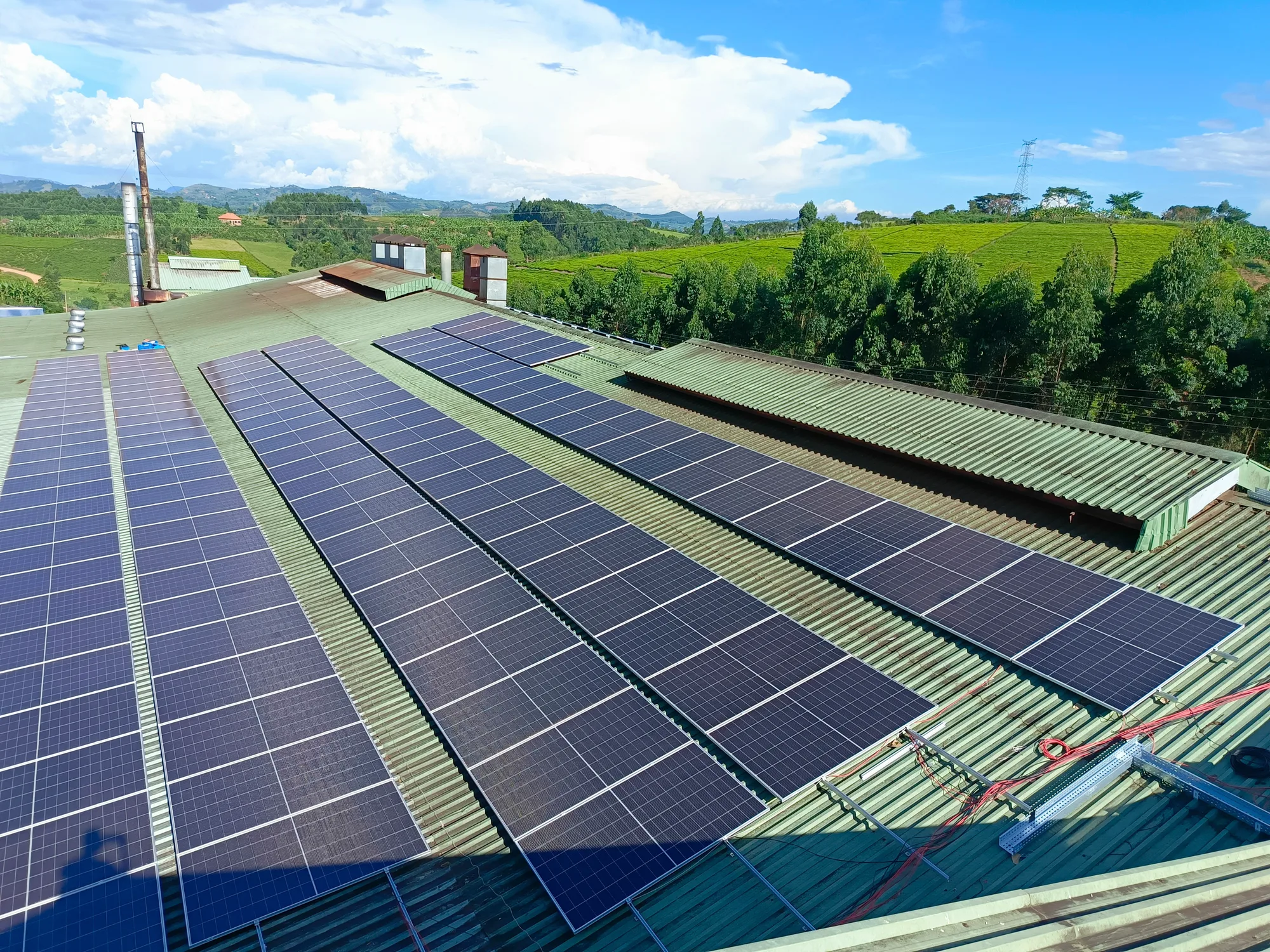
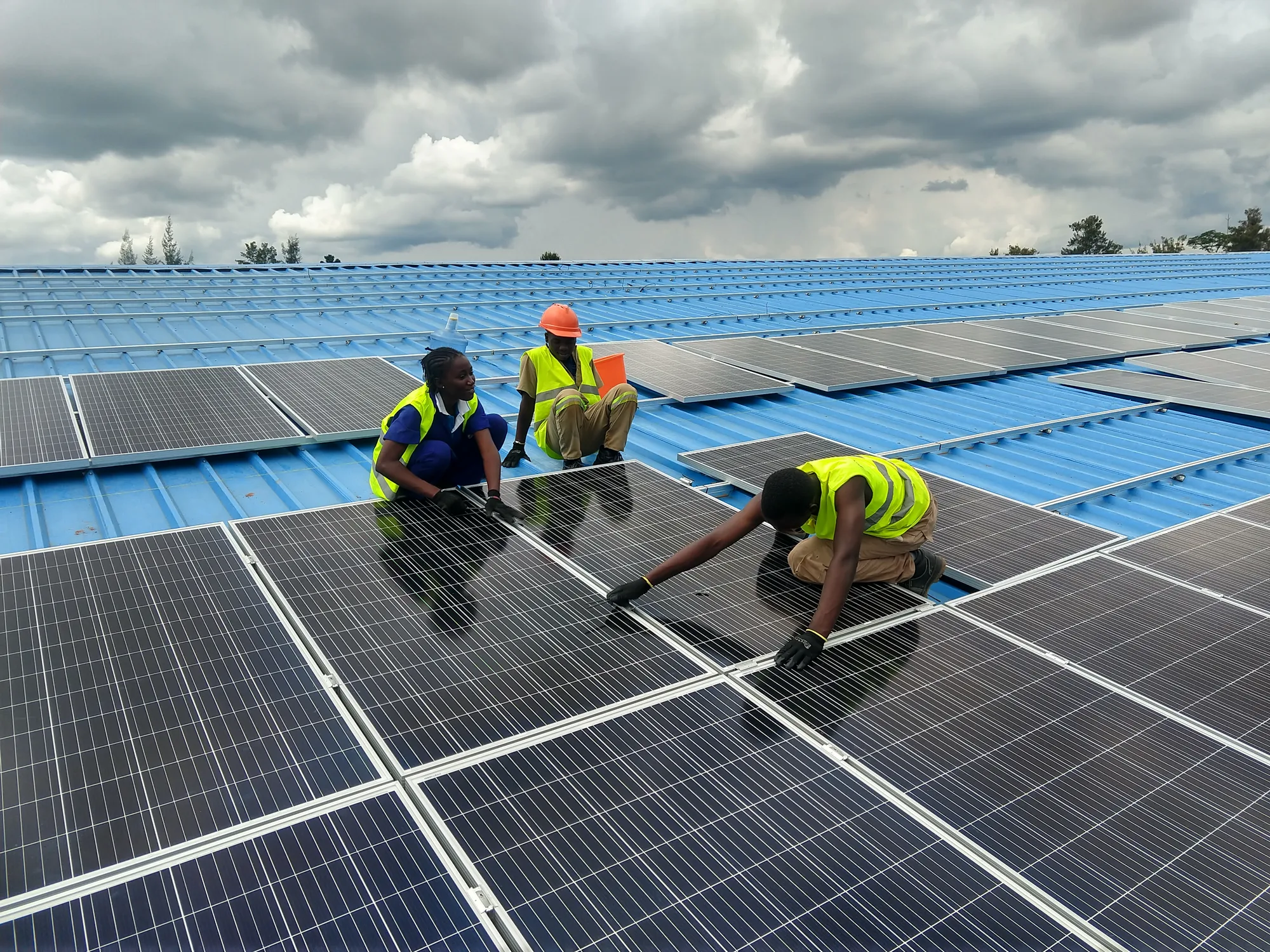
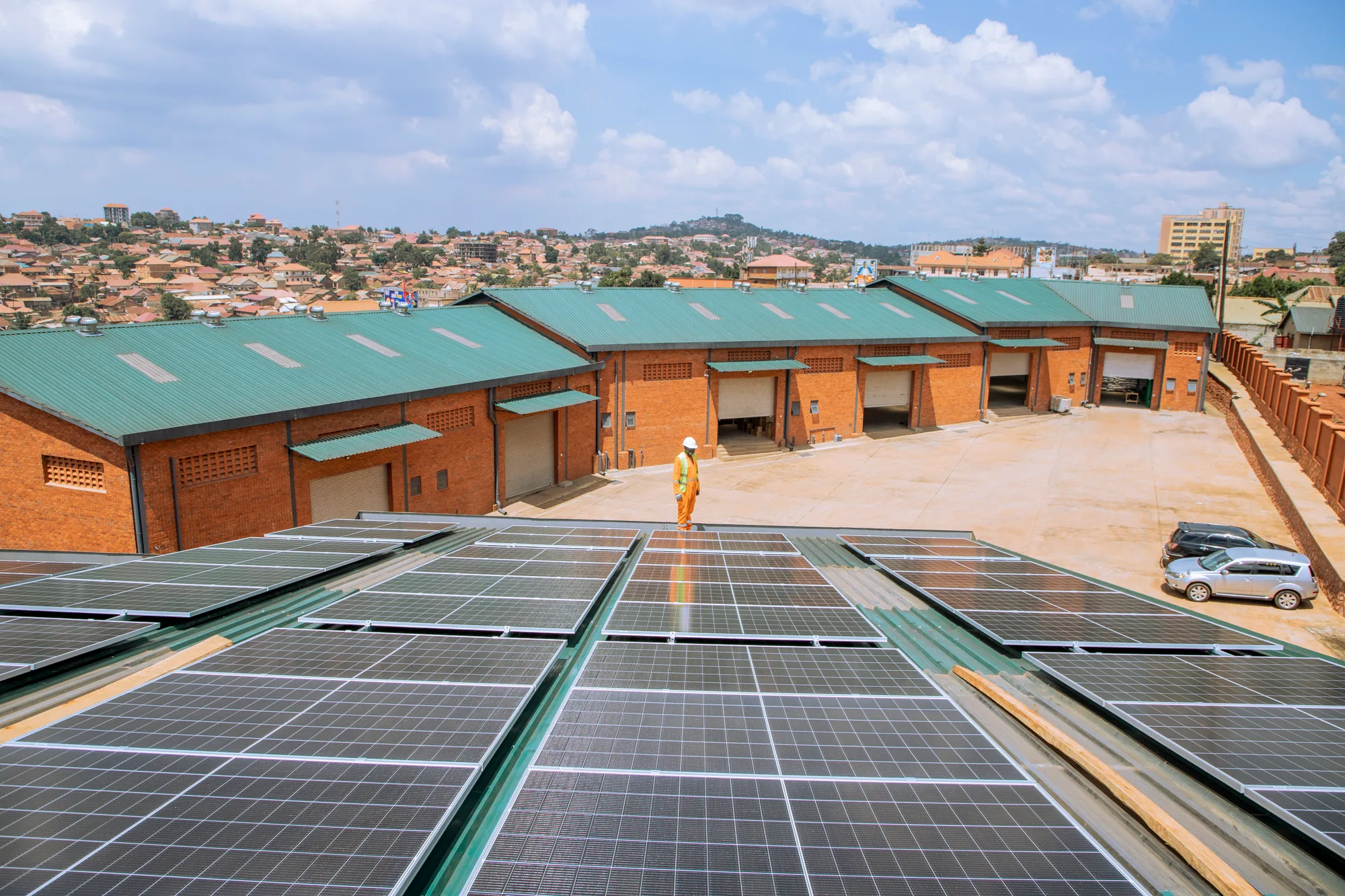
Seven years, three systems, and a CT scanner at Naggalama
A hospital relationship that started with 12 kWp in 2019 now carries a CT scanner through outages. Each of the three systems solved a different problem.
Read more →What full daytime cover actually looks like at a food processor
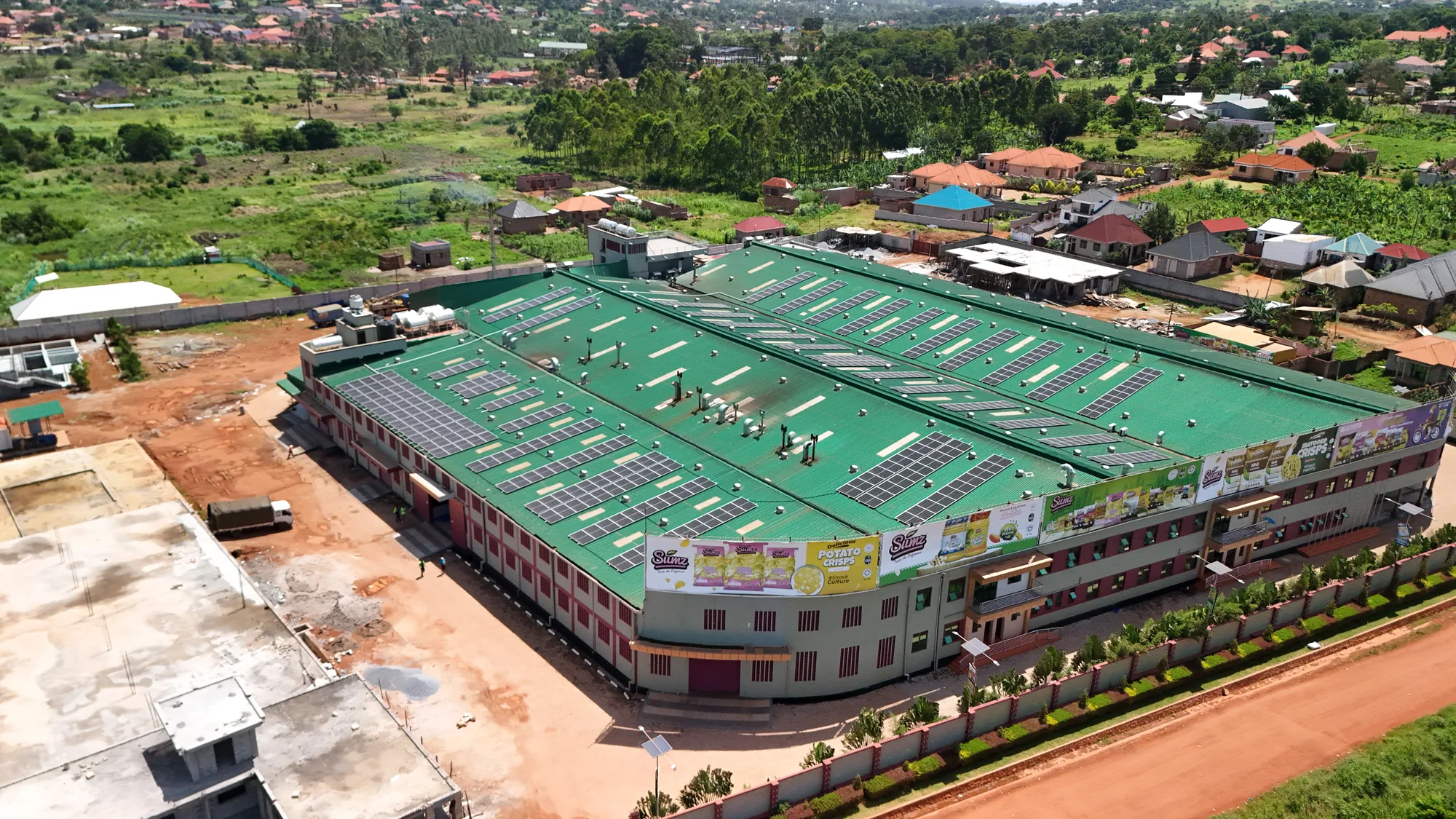
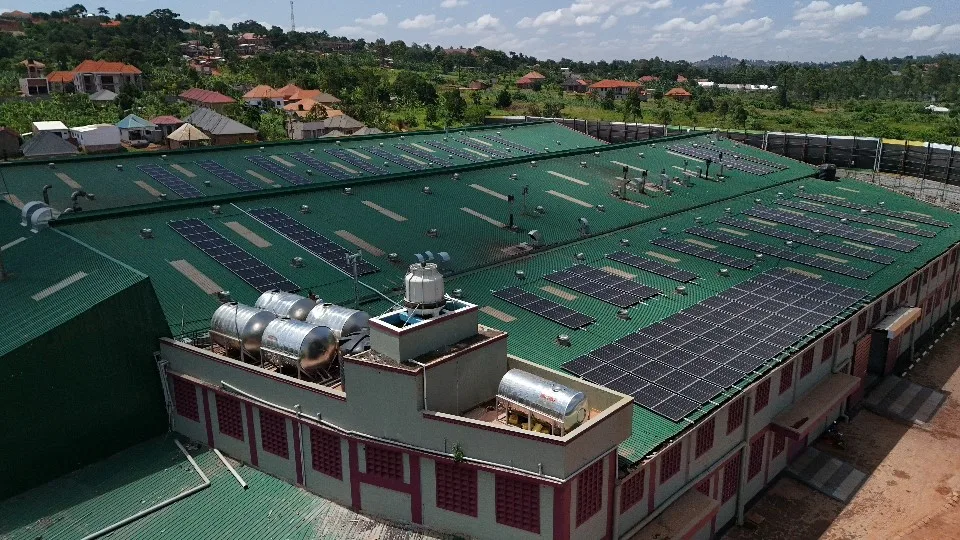
A 250 kWp grid-tied system at Sumz Food Industries in Nkoowe covers the full daytime process load and is paid for under a power purchase agreement (PPA). The sizing follows from the load and from Uganda’s grid rules.
Read more →Solar on a site that never switches off
Next Media Park in Kampala has 86 kWp of PV and 96 kWh of storage. Broadcast runs 24 hours a day, which changes what a solar system has to be.
Read more →Why we specify LFP over NMC on weak grids
A battery on a weak Ugandan grid cycles more often than the same battery in a stable market. That decides the chemistry we choose and how long it lasts.
Read more →